Custom Wood Patio Covers
Engineered for Southern California. Permitted, inspected, and built to last by a contractor with 35 years of experience in Riverside and San Bernardino counties.
Solid Wood Patio Covers Built for Riverside’s Climate
A wood patio cover is one of the most impactful improvements you can make to a Southern California home. It extends your outdoor living space, provides shade during the hottest months, protects outdoor furniture from UV damage, and adds measurable value to your property. But building a patio cover that actually lasts — one that meets California residential building code, passes inspection on the first attempt, and stands strong through decades of sun exposure and seasonal wind events — requires more than lumber and fasteners. It requires engineering, experience, and a thorough understanding of local code requirements.
BPP Construction has been building custom wood patio covers in Riverside, CA, and the surrounding Inland Empire communities for 35 years. Every structure we build is designed for the specific conditions of your property, engineered to meet the load and lateral requirements of your local jurisdiction, and constructed with select-grade lumber rated for structural applications. We handle the full scope of work from initial design consultation through permit acquisition, construction, and final building department inspection sign-off.
Ben, the owner of BPP Construction, personally oversees every patio cover project. His philosophy is straightforward: design it correctly, build it to code, use quality materials, and deliver a structure that the homeowner never has to worry about. After 35 years in the field, that approach has produced a long track record of successful projects and satisfied customers across Riverside County and San Bernardino County.
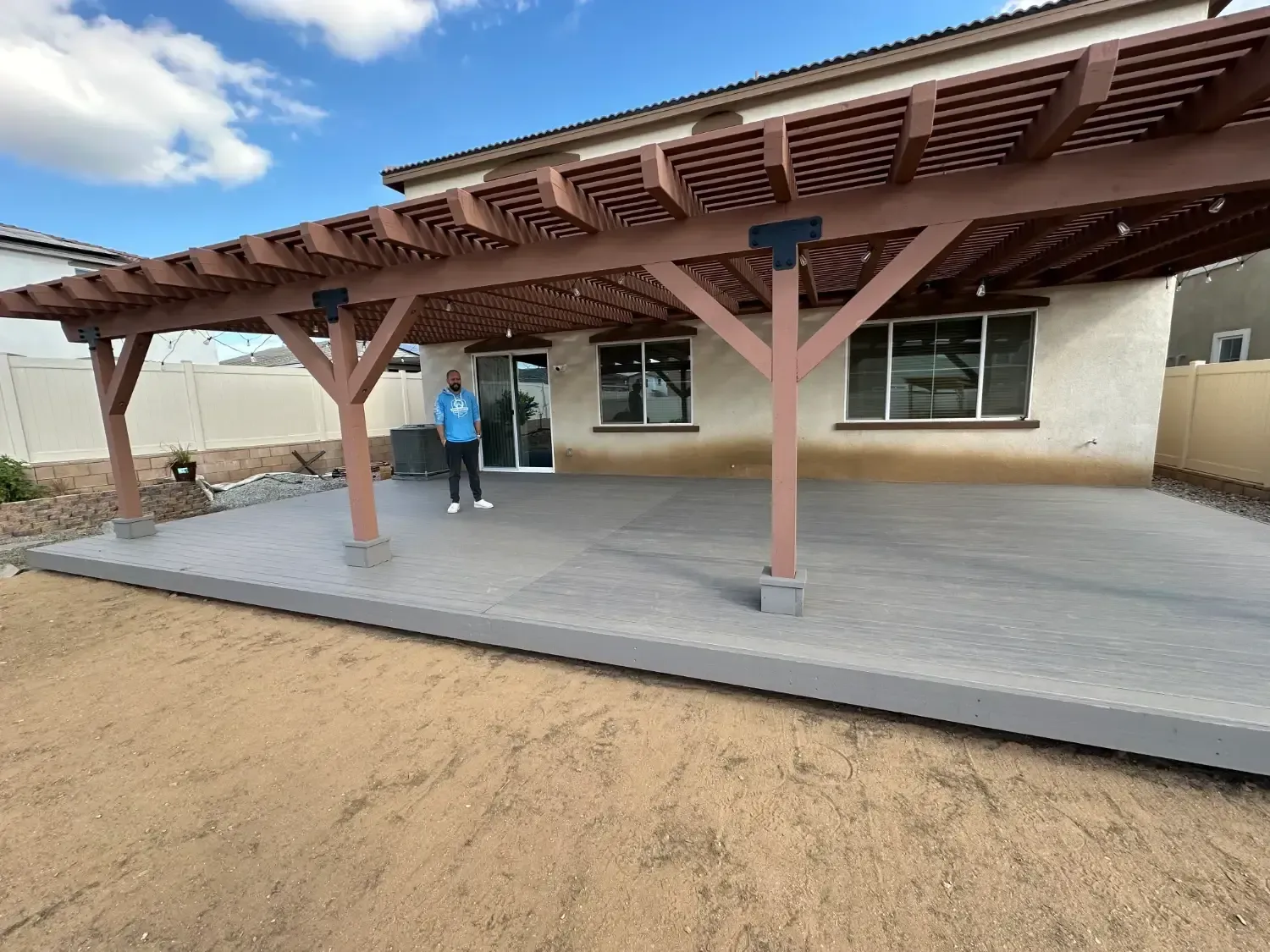
Attached vs. Detached Patio Covers
Attached Patio Covers
An attached patio cover connects directly to your home’s existing structure, typically anchoring to a ledger board fastened to the house framing. This design provides a seamless transition from indoor to outdoor living space. Under California building code, attached patio covers must meet specific requirements for ledger connections, including proper flashing to prevent water intrusion, lag bolts or through-bolts into the house rim joist or framing, and lateral bracing to resist wind and seismic loads. BPP Construction installs every ledger connection to code, using approved hardware and proper waterproofing techniques that prevent the moisture damage we often see on improperly attached structures.
Detached (Freestanding) Patio Covers
A freestanding patio cover stands independently of your home, supported entirely by its own posts and footings. This option works well for homes where attaching to the existing structure is impractical, or for homeowners who want to create a separate outdoor living area away from the house. Freestanding structures require additional engineering for lateral stability since they cannot rely on the house for bracing. Our detached patio covers use a minimum of four engineered footings sized for local soil bearing capacity, with Simpson Strong-Tie or equivalent approved connectors at every post-to-beam and post-to-footing connection.
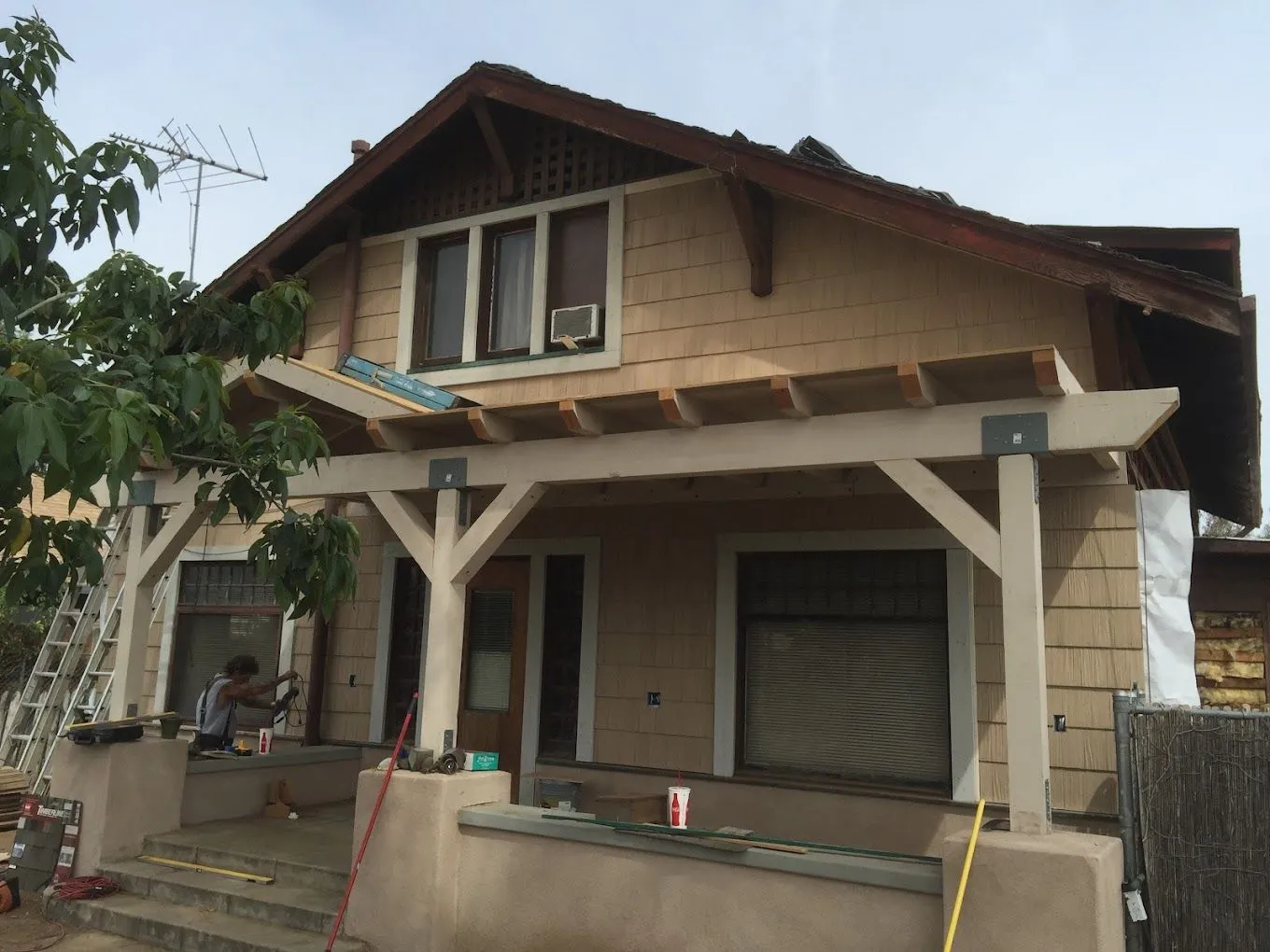
From Consultation to Completed Cover
Every patio cover project follows a proven process refined over 35 years. This structured approach prevents costly mistakes, eliminates surprises, and ensures the finished structure passes final inspection without re-work.
Site Assessment & Design
We visit your property, assess soil conditions, measure the attachment area, evaluate existing framing, and discuss your goals for the space. We provide a detailed scope of work and honest cost estimate before any commitment.
Engineering & Permits
We prepare structural plans showing footing sizes, beam spans, post locations, and hardware specifications. Our established connections with Riverside and San Bernardino County building departments keep the permit process moving efficiently.
Construction & Inspection
We pour footings, set posts, install beams and rafters, and complete all finish work using select-grade lumber. Every phase is inspected by the building department before we proceed. Final walkthrough with you confirms every detail.
Lumber Selection & Footing Requirements

Material selection directly determines how long your patio cover lasts and how well it performs in Riverside’s climate. BPP Construction uses select-grade pressure-treated Douglas fir or southern pine for all structural members — posts, beams, ledger boards, and rafters. For visible finish elements like fascia boards and decorative trim, we offer naturally rot-resistant redwood and western red cedar, which age beautifully and resist insect damage without chemical treatment.
California building code requires patio cover footings to reach a minimum depth that extends below the frost line and into undisturbed native soil. In most Riverside County jurisdictions, this means concrete footings a minimum of 12 inches in diameter and 18 to 24 inches deep, depending on soil bearing capacity and the loads being supported. For expansive soil conditions common in parts of the Inland Empire, deeper footings or pier-and-grade-beam systems may be required.
Every footing we pour is inspected by the building department before we set posts. We use Simpson Strong-Tie post bases and approved connectors at every structural joint, ensuring positive connections that resist both uplift from wind loads and lateral forces from seismic activity. This attention to hardware and connection details is what separates a code-compliant patio cover from one that may look fine on the surface but fails to meet structural safety requirements.
Explore More Outdoor Structures
Patio covers are just one part of our outdoor construction expertise. BPP Construction also builds custom pergolas and decks — all with the same commitment to engineering, permits, and California code compliance. Many homeowners combine a patio cover with a new deck or add a pergola extension for a complete outdoor transformation.
Wood Pergola Covers
Open-air pergola structures that provide filtered shade and architectural character. Custom designed and fully permitted, with engineered footings for your specific soil conditions and local wind load requirements.
Learn More →Decks
Custom wood decks built to California structural standards. From compact platform decks to multi-level outdoor living spaces with stairs, railings, and built-in seating — all fully permitted and inspected.
Learn More →Wood Exterior Repair
If your existing patio cover, eaves, or fascia show signs of rot or damage, our repair team can restore structural integrity and appearance with precision-matched replacement pieces.
Learn More →Patio Cover FAQs — California Building Code
Do I need a building permit for a patio cover in Riverside County?
Yes. Under the California Building Code (CBC), any attached or detached patio cover structure requires a building permit from your local jurisdiction. In Riverside County and the cities within it — including Riverside, Corona, Moreno Valley, and others — you must submit plans showing structural calculations, setback compliance, footing details, and connection hardware. BPP Construction handles the entire permit process for you, from plan preparation through final inspection sign-off. Our established relationships with local building officials in both Riverside and San Bernardino counties help streamline approvals and reduce delays. Skipping the permit process is never advisable because unpermitted structures can result in code enforcement actions, fines, and complications when selling your home.
What are the California code requirements for patio cover footings?
California Building Code requires that patio cover footings extend into undisturbed native soil below the frost line. In most Riverside County jurisdictions, this means concrete footings a minimum of 12 inches in diameter and typically 18 to 24 inches deep, depending on soil bearing capacity and the tributary loads being supported. Expansive soil conditions, which are common in parts of the Inland Empire, may require deeper footings or engineered pier-and-grade-beam foundations. The footing must be poured and inspected by the building department before posts are set. BPP Construction designs every footing to meet or exceed the requirements for your specific site, soil type, and structural loads, ensuring your patio cover passes inspection without re-work.
What setback requirements apply to patio covers in California?
Setback requirements vary by jurisdiction, but most Riverside County cities require patio covers to maintain a minimum five-foot setback from side and rear property lines. Attached patio covers may have different setback requirements than detached structures. Some jurisdictions allow reduced setbacks for open-lattice style covers versus solid roof covers. Your local zoning code determines the specific setbacks for your property, and your homeowners association (if applicable) may impose additional restrictions. BPP Construction reviews all setback requirements during the initial site assessment and designs your patio cover to comply with both municipal zoning and any applicable HOA guidelines before submitting for permits.
How is an attached patio cover connected to my house?
An attached patio cover connects to your home through a ledger board — a structural member fastened directly to the house framing. California code requires the ledger to be attached using lag bolts or through-bolts that penetrate into the house rim joist or wall framing, with specific spacing requirements based on the loads being transferred. Equally important is the flashing installation above the ledger board, which prevents water from entering the wall cavity behind it. Improper ledger attachment is one of the most common causes of both structural failure and water damage in residential patio covers. BPP Construction installs every ledger connection using code-approved hardware, proper bolt spacing, and Z-flashing or equivalent waterproofing to protect your home from moisture intrusion.
What type of lumber should I use for a patio cover in Southern California?
For structural components — posts, beams, ledgers, and rafters — BPP Construction uses select-grade pressure-treated Douglas fir or southern pine rated for ground contact and structural applications. Pressure treatment protects against termites and moisture damage, both of which are prevalent in the Riverside area. For visible finish elements like fascia boards, decorative trim, and lattice, naturally rot-resistant species like redwood and western red cedar offer superior appearance and durability without chemical treatment. We never use construction-grade or economy lumber for structural applications, and we never use untreated wood where moisture exposure or ground contact is expected. Your lumber selection affects both the longevity of your patio cover and its ability to pass building department inspection.
How long does it take to build a wood patio cover?
A typical attached patio cover project takes approximately two to four weeks from permit approval to completion, depending on size, design complexity, and weather conditions. The permit process itself typically adds one to three weeks. Larger or more complex projects, such as those requiring engineered foundations for expansive soil or custom architectural details, may take four to six weeks of construction time. BPP Construction provides a detailed project timeline during your initial consultation, and we communicate progress updates throughout the build. Call (909) 227-4193 to discuss your specific project timeline.
Can I add a patio cover to an existing concrete slab?
In many cases, yes, but it depends on the condition and thickness of your existing slab. If the slab was poured to residential standards with adequate thickness and reinforcement, it may be possible to core-drill through the slab and install footings beneath it. If the slab is thin, cracked, or settling, separate footings adjacent to the slab may be the better approach. BPP Construction evaluates your existing slab during the site assessment and recommends the most structurally sound footing method for your situation. Regardless of approach, all footings must meet California code requirements and pass building department inspection before post installation begins.
Ready for Your New Patio Cover?
35 years of patio cover expertise in Riverside and San Bernardino counties. Fully engineered, permitted, and built to California code.
(909) 227-4193 ben.bpp@gmail.com Request a Free Estimate