Custom Wood Pergola Covers
Open-air structures engineered for Riverside’s climate. Fully permitted, custom designed, and built to California accessory structure code by a 35-year veteran contractor.
Architectural Character with Engineered Strength
A wood pergola transforms your outdoor space in a way that few other structures can. Unlike a solid patio cover that provides full shade, a pergola creates a defined architectural volume with filtered sunlight — an outdoor room that feels open to the sky while still offering shade, visual structure, and a sense of enclosure. Pergolas add significant property value, create a framework for outdoor entertaining, and provide a distinctive design element that sets your home apart from every other property on the street.
BPP Construction designs and builds custom wood pergolas throughout Riverside and San Bernardino counties. Every pergola we construct is engineered for your specific site conditions — soil bearing capacity, wind exposure, seismic zone requirements, and property setbacks. We use select-grade lumber, pour footings to code specifications, and connect every structural joint with approved hardware. The result is a pergola that looks beautiful on day one and remains structurally sound for decades, even through the wind events and extreme heat cycles that characterize the Inland Empire climate.
Ben, the owner of BPP Construction, has designed and built pergolas across the full range of residential applications during his 35 years in the trade — from intimate garden pergolas that frame a single seating area to expansive structures that span entire patios and outdoor kitchens. His approach combines the aesthetic sensibility to create a structure that enhances your home’s architecture with the engineering expertise to ensure it meets every California code requirement for accessory structures.
Attached vs. Freestanding Pergolas
The two primary pergola configurations each offer distinct advantages depending on your property layout, intended use, and the relationship between the pergola and your home’s existing structure.
Attached Pergola
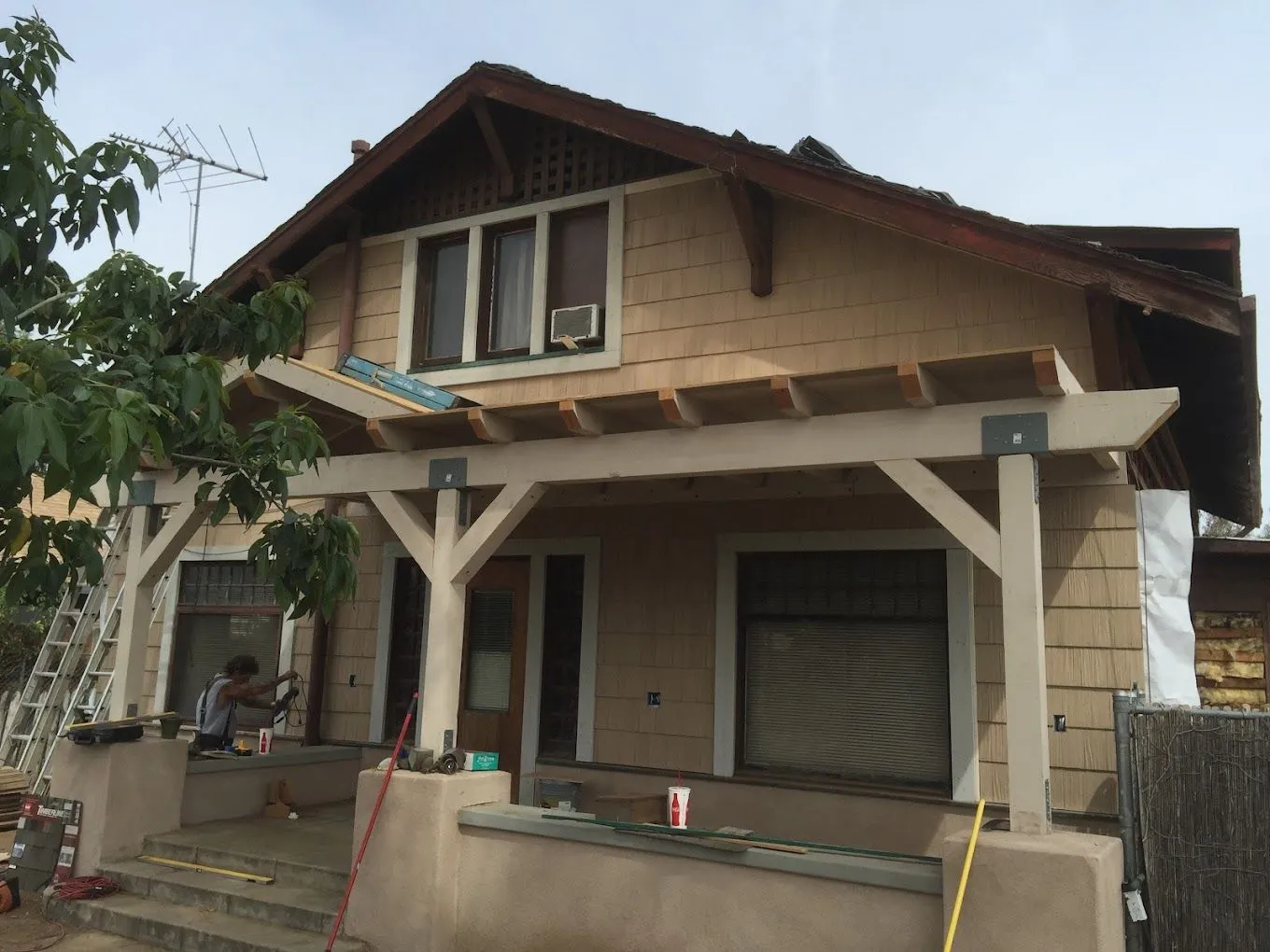
An attached pergola connects to your home via a ledger board, similar to an attached patio cover. One end of the pergola rafters bear on the ledger while the opposite ends are supported by posts on independent footings. This configuration creates a seamless transition from interior to exterior space and requires only two posts instead of four or more. Under California code, the ledger connection must use approved lag bolts or through-bolts into the house framing, with proper Z-flashing to prevent moisture intrusion at the wall. BPP Construction installs every ledger to the same structural and waterproofing standards we use for solid patio covers — because the connection requirements are identical regardless of whether the cover is solid or open-lattice.
Freestanding Pergola
A freestanding pergola stands independently of your home on its own four or more posts, each on an individual concrete footing. This design allows placement anywhere on your property — over a patio, beside a pool, in a garden, or as a standalone focal point in the landscape. Because freestanding pergolas have no connection to the house for lateral stability, they require additional engineering to resist wind loads and seismic forces. BPP Construction designs freestanding pergola foundations with properly sized footings, steel post bases, and knee bracing or moment-frame connections where required by local code to achieve adequate lateral resistance for the Inland Empire’s wind and seismic conditions.
From Design Concept to Finished Pergola
Every pergola project follows the same proven process that BPP Construction has refined over 35 years of outdoor structure building. Disciplined execution prevents costly errors and ensures the finished product exceeds expectations.
Design Consultation
We visit your property to assess the site, discuss your vision for the space, measure accurately, evaluate soil conditions, and determine the optimal pergola size, placement, and configuration. You receive a detailed scope of work and honest estimate.
Engineering & Permits
We prepare structural plans showing footing sizes, post locations, beam spans, rafter spacing, and all connection hardware. Our established relationships with building departments across Riverside and San Bernardino counties streamline the permit approval process.
Construction & Completion
We excavate and pour footings, set posts with approved bases, install beams, mount rafters at the designed spacing, and complete all finish details. Building department inspections at each phase. Final walkthrough confirms every detail meets your expectations.
Lumber Selection & Footing Engineering

Lumber selection for a pergola matters both structurally and aesthetically, because unlike a solid patio cover where much of the framing is concealed, a pergola puts every beam and rafter on full display. BPP Construction uses select-grade pressure-treated Douglas fir or southern pine for all structural members that require dimensional stability and load-carrying capacity. For the most visible elements — top-mounted rafters, decorative beam ends, and finish caps — we offer naturally rot-resistant redwood and western red cedar that age beautifully and resist insect damage without requiring chemical treatments.
Footing engineering for pergolas follows the same California Building Code requirements as any other accessory structure. In Riverside County, this typically means concrete footings a minimum of 12 inches in diameter and 18 to 24 inches deep, with the exact size determined by the tributary loads each footing must support and the soil bearing capacity at your specific site. Expansive clay soils, which are prevalent in many Inland Empire neighborhoods, may require deeper piers or engineered pier-and-grade-beam foundations to prevent seasonal soil movement from shifting the structure.
Every footing we pour includes a Simpson Strong-Tie or equivalent approved post base that provides both bearing support and uplift resistance. In areas with high wind exposure, we may add hold-down hardware and additional lateral bracing to exceed the minimum code requirements. This over-engineering is deliberate — when a structure is designed to last 30 to 50 years, building it slightly above minimum standards costs very little extra but adds significant long-term durability and safety margin.
Complete Your Outdoor Living Space
A pergola pairs naturally with other outdoor structures. Many homeowners add a custom deck beneath their pergola or combine it with a solid patio cover for areas that need full shade. BPP Construction builds all three, so your entire outdoor project is coordinated under one experienced contractor.
Wood Patio Covers
Solid wood patio covers that provide full shade and weather protection. Combine a solid cover over your main seating area with a pergola extension for a dynamic outdoor space that offers both sun and shade.
Learn More →Decks
Custom wood decks that create the perfect platform beneath a pergola. From ground-level platforms to multi-level deck systems with integrated stairs and railings — all fully engineered, permitted, and built to California code.
Learn More →Wood Exterior Repair
If your existing pergola or outdoor structure shows signs of rot, termite damage, or weathering, our repair services can restore its structural integrity and appearance without full reconstruction.
Learn More →Pergola FAQs — California Building Code
Do I need a building permit for a pergola in Riverside County?
Yes. Under the California Building Code, a pergola is classified as an accessory structure, and any accessory structure attached to a dwelling or exceeding a certain size threshold requires a building permit. In most Riverside County jurisdictions, even small freestanding pergolas require permits because they have permanent footings that are considered improvements to the property. The permit process ensures your pergola meets code requirements for structural integrity, setbacks from property lines, lot coverage limits, and height restrictions. BPP Construction handles the entire permit process — from preparing structural plans to scheduling building department inspections — so you never have to navigate the permitting bureaucracy yourself. Skipping the permit can result in code enforcement action, fines, and complications when you sell your home.
What are the setback requirements for pergolas in California?
Setback requirements for pergolas are determined by your local zoning code, which varies by city and county. In most Riverside County jurisdictions, accessory structures must maintain a minimum five-foot setback from side and rear property lines. Some cities allow a reduced three-foot setback for open structures like pergolas, while others apply the same setbacks as the main dwelling. Additionally, your property may have easements that further restrict where structures can be placed. If you belong to a homeowners association, their CC&Rs may impose additional setback and design requirements. BPP Construction reviews all applicable setback requirements during the initial site assessment and designs your pergola to comply with municipal zoning, any HOA restrictions, and California Building Code before we submit for permits.
What is the difference between a pergola and a patio cover in California building code?
Under California Building Code, a patio cover is a solid-roof structure that provides complete overhead coverage and sheds water, while a pergola is an open-lattice or open-rafter structure that allows light and air to pass through. This distinction matters for several reasons. First, some jurisdictions have different setback requirements for open versus solid structures. Second, patio covers may have more stringent structural requirements because they must resist rain, snow, and full wind loads on a solid surface. Third, lot coverage calculations may treat open pergolas differently than solid covers, which can affect how much of your lot you are allowed to build on. BPP Construction builds both pergolas and solid patio covers, and we advise clients on which structure — or combination of both — best fits their property, budget, and goals.
What footing depth does California code require for pergola posts?
California Building Code requires that footings for accessory structures extend into undisturbed native soil below the frost line. In the Riverside, CA, area, this typically means concrete footings a minimum of 12 inches in diameter and 18 to 24 inches deep, though the exact depth depends on the tributary loads being supported and the soil bearing capacity at your specific site. For freestanding pergolas that rely entirely on their own footings for lateral stability (no connection to the house), footings may need to be larger or deeper to resist overturning forces from wind. BPP Construction designs every footing to meet or exceed local code requirements, factoring in your soil conditions, the pergola’s wind exposure, and seismic design criteria for the Inland Empire region.
How long does it take to build a wood pergola?
A standard wood pergola typically takes one to three weeks of on-site construction time from permit approval to completion, depending on the size, design complexity, and whether it is attached or freestanding. The permit process adds an additional one to three weeks before construction can begin. Larger or more complex projects — such as pergolas integrated with outdoor kitchens, multi-level decks, or custom architectural details — may take three to five weeks. BPP Construction provides a detailed project timeline during your initial consultation and communicates progress at every stage. Weather delays are rare in Riverside but are factored into our scheduling when seasonal conditions warrant. Call (909) 227-4193 to discuss your specific project timeline.
Can I add a solid cover or shade material to my pergola later?
Yes, but adding a solid covering to an existing pergola may require a new building permit because it changes the structure from an open-lattice accessory structure to a solid patio cover — which has different structural requirements under California code. A solid cover must resist full wind uplift, rain loads, and potentially additional dead loads from the covering material itself. If your pergola was originally engineered only for its own weight and the minimal loads of an open structure, it may need structural upgrades (larger beams, stronger connections, or additional footings) before a solid cover can be safely added. BPP Construction can evaluate your existing pergola, determine whether it can support a solid covering as-is or with upgrades, and handle the permit process for the modification.
What height restrictions apply to pergolas in Riverside County?
Height restrictions for accessory structures vary by jurisdiction. In most Riverside County cities, accessory structures are limited to a maximum height of 15 to 16 feet, though some jurisdictions measure height differently depending on whether the structure is attached to the dwelling or freestanding. Your local zoning code and any applicable HOA restrictions determine the specific height limit for your property. Additionally, California Building Code requires that the design account for wind loads at the structure’s full height, which may affect structural sizing. BPP Construction reviews all height restrictions during the design phase and ensures your pergola complies with both local zoning and structural code requirements.
Ready for Your Custom Pergola?
35 years of outdoor structure expertise. Fully engineered, permitted, and built to California code.
(909) 227-4193 ben.bpp@gmail.com Request a Free Estimate